

See the farm. In every season.
A visual journey through Karada Herbal Farm's 150-acre pomegranate plantation in Birgod-Shajapur, Madhya Pradesh.
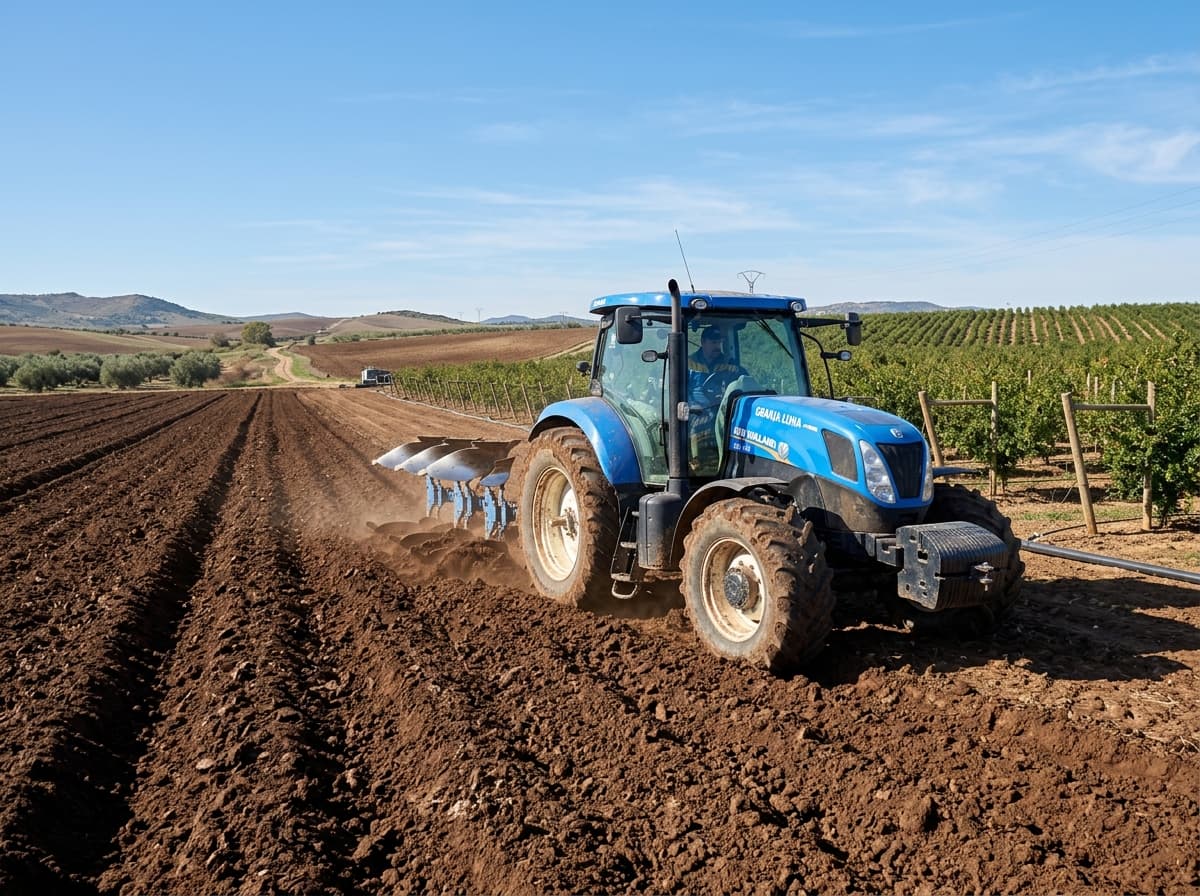
Every harvest begins with the right foundation.
Quality land selection, soil preparation and ideal location set the stage for a productive and sustainable pomegranate farm.
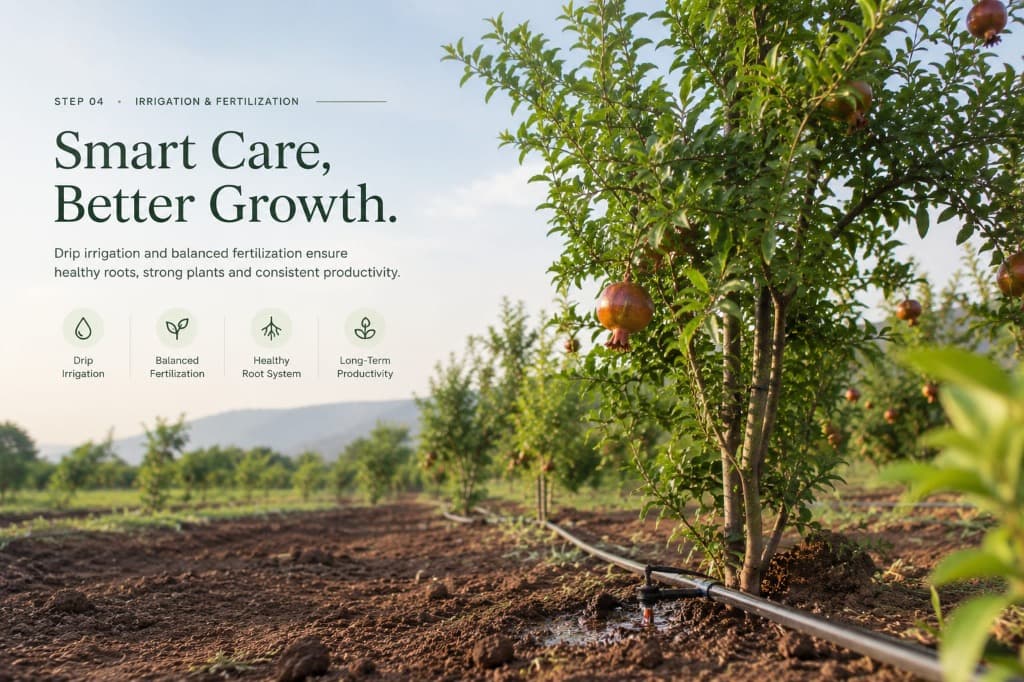
Smart Care, Better Growth.
Drip irrigation and balanced fertilization ensure healthy roots, strong plants and consistent long-term productivity.
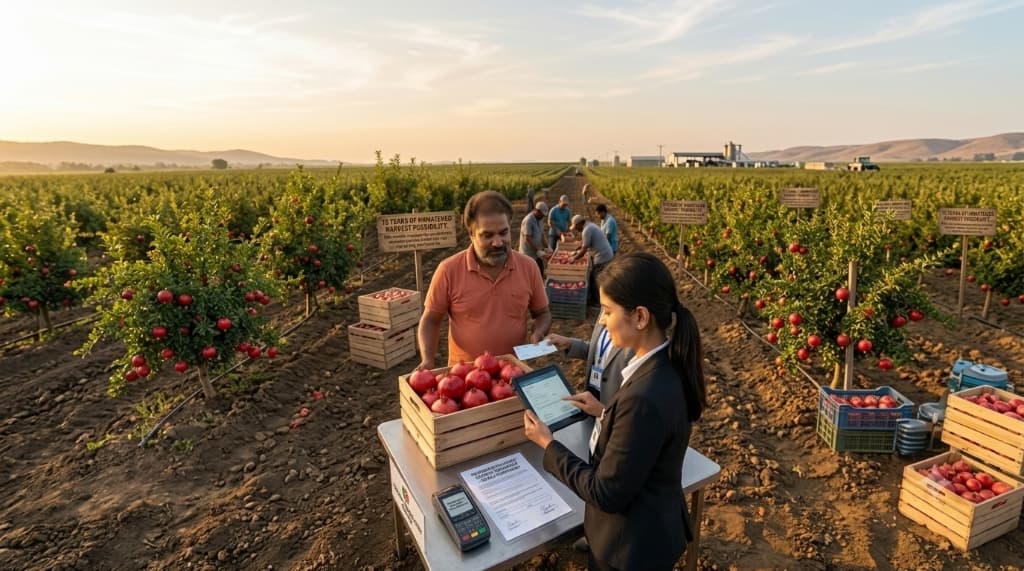
Transparent returns at every harvest.
Our structured buyback programme ensures investors receive fair, documented returns directly from the farm at each harvest cycle.
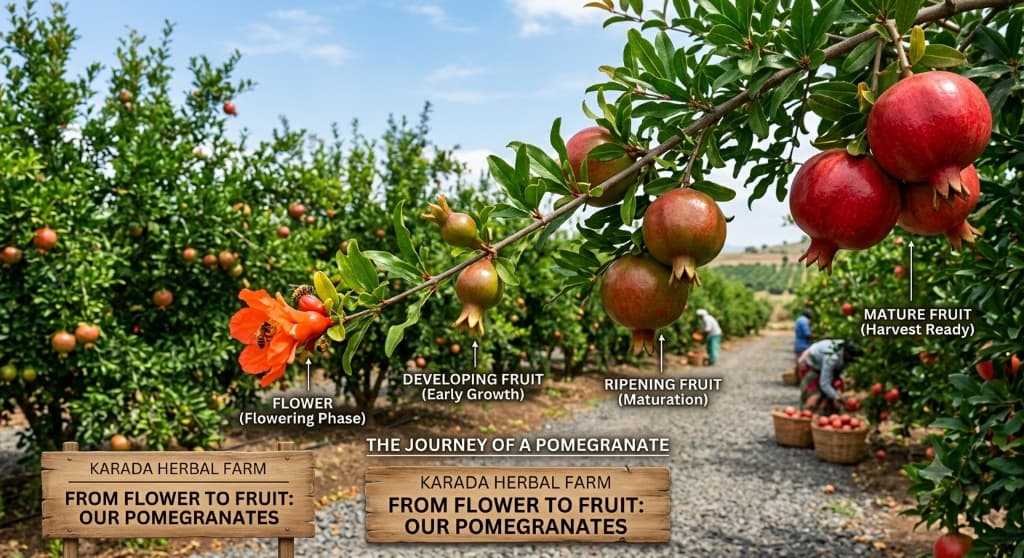
From flower to fruit — our pomegranates.
Each pomegranate passes through a carefully managed growth cycle, from flowering phase through early growth, maturation and peak harvest readiness.
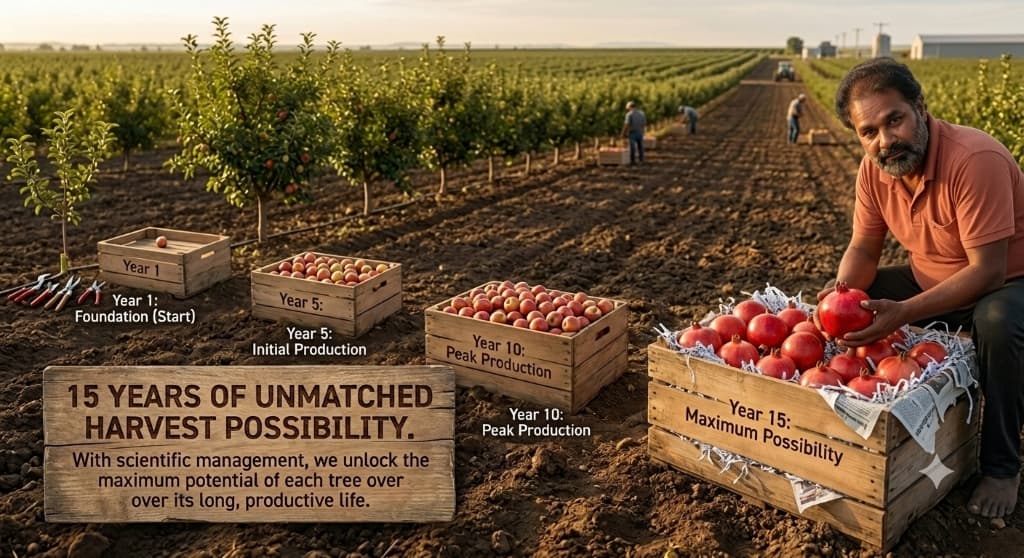
15 years of unmatched harvest possibility.
With scientific management, we unlock the maximum potential of each tree over its long, productive life — from first production to peak yield.
A farm you can walk through.
Karada Herbal Farm's own farm is more than a plantation. It is a place where visitors can experience the farming model in an actual field environment and understand how a pomegranate plantation develops over time.
Instead of seeing the model only through numbers, visitors can walk through the farm, observe the plantation layout, see plants at different stages of growth and understand the environment in which the farming system operates.
PLAN YOUR FARM VISITWalk the plantation
Experience the scale and layout of an actual pomegranate farm and see how the plantation is organized across the field.
Observe different growth stages
See plantations of different ages and understand how the farm changes as the plants progress through their lifecycle.
Understand the farming environment
Get a practical view of the field conditions, plantation environment and day-to-day setting in which the farming model operates.
Ask. Observe. Understand.
A farm visit creates space for direct observation and conversation before moving ahead with a project.
See the farm through time.
A pomegranate plantation changes significantly as it matures. At Karada's own farm, visitors can observe plantations representing different stages of this long-term journey.
The beginning of the journey.
Around the second year, the plantation enters its first production stage. This is where the transition from establishing the farm to producing fruit becomes visible.
Growth becomes more visible.
As the plantation develops, the plants become more established and the farm begins to reflect the structure of a developing long-term plantation.
The farm takes its mature form.
A decade into the plantation journey, visitors can observe a substantially more established farm environment and understand how the plants and field environment have evolved over time.
A plantation built for years.
The fifteen-year stage represents the long-term horizon of the farming model and gives visitors a way to see the plantation beyond its initial establishment and early production years.
Don't just look at it. Understand it.
A farm visit is an opportunity to move from information to direct observation. Walk through the plantation, look at the field environment and understand how the different stages of a long-term farming model come together.
What makes a farm visit valuable:
Plantation layout
Observe the arrangement of plants across the field and understand the physical structure of the plantation.
Plant growth
Compare plants at different ages and observe how the plantation develops over the years.
Farm environment
Experience the actual field conditions and agricultural setting in which the plantation operates.
Long-term perspective
Connect the different plantation stages with the longer-term vision of a pomegranate farming project.
Build structured agricultural projects that can perform over time.
Karada's mission is to bring together agricultural land, technical knowledge, farming technology, production management and market-linked buyback into one organised farming system.
Make agriculture more technology-driven, organised and long-term.
Karada aims to continue developing farming projects where technology, technical expertise, production planning and market requirements work together seamlessly.
Ready to explore the Karada model?
Whether you want to understand the farming model, explore a project, or visit our farm — our team is here to help you take the next step.